If you’ve been dealing with jaw pain, clicking, or tension headaches and your dentist hasn’t found a clear cause, the problem may not actually be in your jaw. The temporomandibular joint and the cervical spine share nerve pathways, muscle groups, and postural relationships that mean dysfunction in one area frequently shows up as pain in the other. At Sitzmann Chiropractic in Lincolnton, NC, Dr. Daniel Sitzmann addresses the cervical component of TMJ pain that often gets missed entirely when the focus stays on the jaw alone.
What Is TMJ and Why Is It So Frequently Misunderstood
The temporomandibular joint is the hinge connecting your lower jaw to your skull, located just in front of each ear. When that joint and the surrounding muscles are functioning normally, you open and close your mouth, chew, and speak without any awareness of it. When something is off, you know it immediately.
TMJ disorder, often called TMD, is a broad term that covers pain and dysfunction in the jaw joint, the muscles that control jaw movement, and the structures around them. Symptoms range from a dull ache in the jaw and face to sharp pain with chewing, clicking or popping sounds when opening the mouth, difficulty fully opening the jaw, and referred pain into the ear, temple, or neck.
The problem with how TMJ is usually approached is that it tends to stop at the jaw. Dentists look at bite alignment, grinding habits, and the joint itself. Those are real contributing factors. But the cervical spine’s role in the picture is frequently left out, and for many patients that’s exactly where the driving tension is coming from.
Why the Neck and Jaw Are More Connected Than Most People Realize
The relationship between the cervical spine and the jaw isn’t coincidental. It’s anatomical.
The muscles that control jaw movement, including the masseter, temporalis, and pterygoids, are in direct fascial and neurological communication with the muscles of the upper cervical spine and suboccipital region. When the upper cervical vertebrae are restricted or misaligned, the tension pattern in those shared muscle groups pulls on the jaw complex from above. The jaw compensates. Over time, that compensation becomes chronic and the joint starts to show the wear of it.
The trigeminal nerve, which is the primary sensory nerve for the face and jaw, also has connections that run into the upper cervical spinal cord. Irritation at the cervical level can sensitize the trigeminal pathways and amplify the pain signals coming from the jaw. This is part of why TMJ patients so often have co-occurring neck pain and tension headaches. The systems are talking to each other constantly.
The Posture Connection
Forward head posture is one of the most significant drivers of both cervical dysfunction and TMJ problems, and most people who have one also have the other. When the head sits forward of the spine rather than balanced over it, the suboccipital muscles at the base of the skull shorten to maintain the head’s position. That chronic shortening creates compression at the upper cervical joints and pulls tension through the fascial system that connects directly to the jaw.
Think about how your jaw position changes when you let your head fall forward. The lower jaw drops slightly, the bite shifts, and the muscles that usually keep everything in balance have to work harder just to hold a resting position. Over hours at a desk or years of accumulated forward head posture, that pattern creates the exact conditions for TMJ dysfunction to develop and persist.
If neck pain is also part of your picture, the neck pain page explains how cervical dysfunction presents and how chiropractic addresses it. The overlap with TMJ is significant and worth understanding.
How Chiropractic Care Addresses the Cervical Component of TMJ
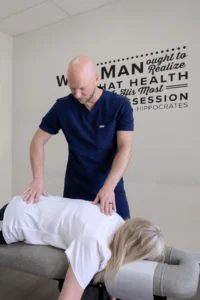
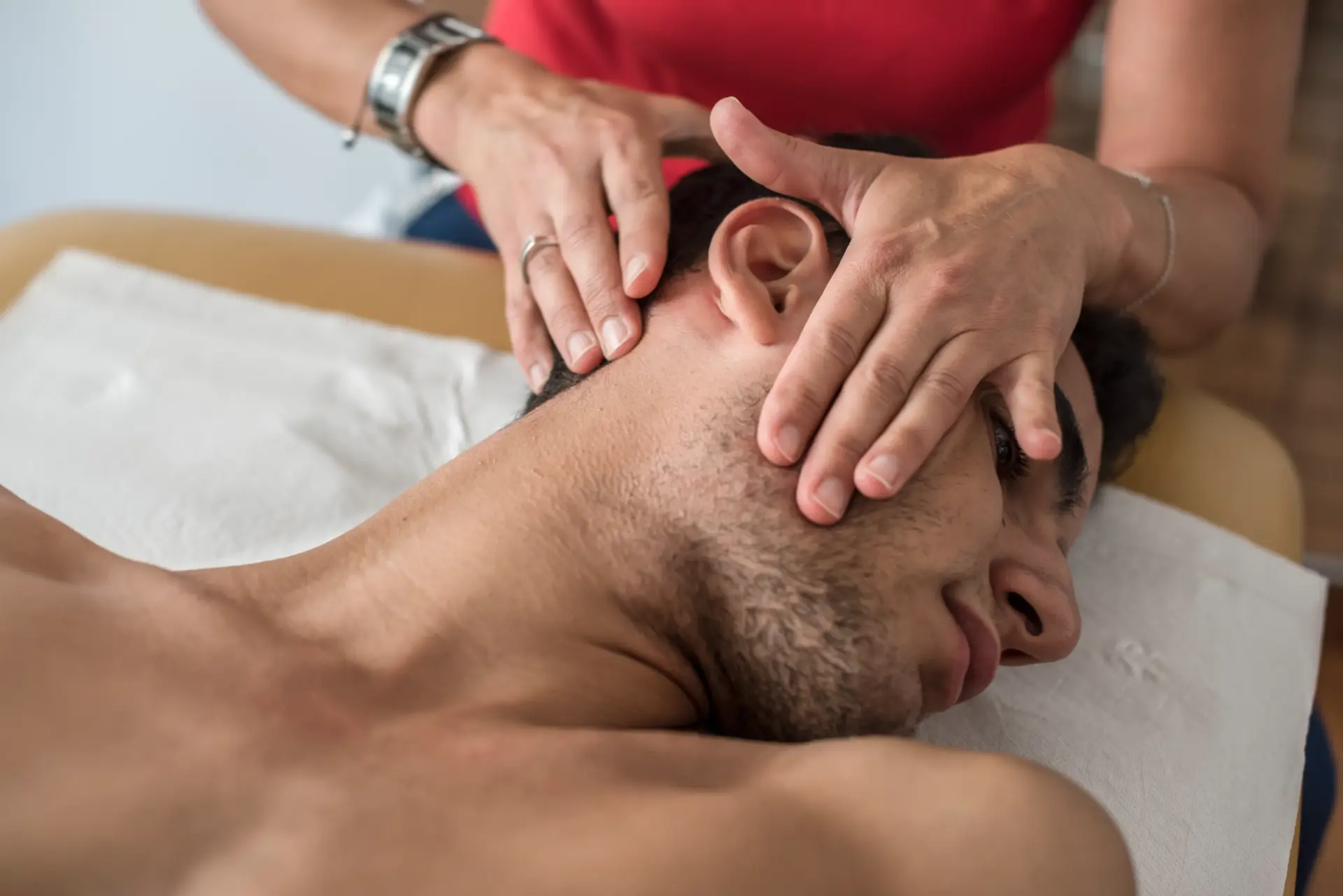
When a TMJ patient comes into Sitzmann Chiropractic in Lincolnton, the evaluation includes the cervical spine alongside the jaw. Dr. Sitzmann is looking at upper cervical mobility, muscle tension patterns in the neck and shoulders, head posture, and how those findings correlate with the jaw symptoms the patient is describing.
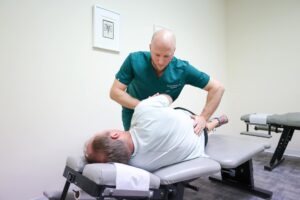
Chiropractic adjustments to the upper cervical vertebrae, particularly C1 and C2, restore proper joint movement and reduce the nerve irritation and muscle tension that are feeding into the jaw complex from above. For many TMJ patients, this is the piece that has never been addressed, and the relief they experience from cervical work surprises them because they didn’t know the neck was part of the problem.
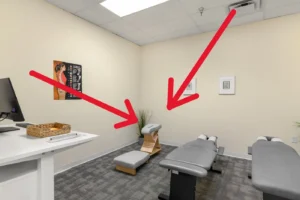
The intersegmental traction table that opens every session at this Lincolnton practice is particularly helpful for TMJ patients because it works along the full cervical and thoracic spine before the adjustment begins. That pre-treatment loosening reduces the baseline tension that the cervical adjustment then has to work through, making the overall effect more thorough.
What Realistic Improvement Looks Like
TMJ cases vary significantly depending on how long the dysfunction has been present and how much joint wear has accumulated. For patients where the cervical component is the primary driver, addressing that cervical tension can produce meaningful and fairly rapid improvement in jaw symptoms, including reduced clicking, less morning stiffness in the jaw, and fewer tension headaches tied to the jaw-neck complex.
For more chronic cases with significant joint involvement, the improvement tends to be more gradual. Dr. Sitzmann is honest with patients about what chiropractic can address and when a coordinated approach with a dentist or oral specialist makes sense. The goal is never to oversell what one type of care can accomplish. It’s to make sure the cervical piece is being handled, because in many TMJ cases it simply hasn’t been.
Headaches are a common companion to TMJ dysfunction and neck tension. If headaches are part of your picture, the headaches and migraines page covers how spinal tension contributes to headache patterns and how chiropractic approaches that.
Common Signs the Neck Is Contributing to Your Jaw Pain
Not every TMJ case has a significant cervical component, but some patterns suggest the neck is in the picture. It’s worth paying attention to whether any of these apply to your situation.
Your jaw pain is worse on days when your neck feels tight or stiff. You wake up with both jaw and neck tension at the same time. Your TMJ symptoms started around the same time as a whiplash injury or a period of increased neck strain. You spend significant time at a desk or looking at screens and have noticed your head tends to sit forward. Headaches that begin at the base of the skull accompany your jaw pain regularly.
Any of these patterns suggests the two systems are connected in your case, and that addressing the cervical spine is worth exploring alongside whatever dental treatment you may already be receiving.
Frequently Asked Questions
Can a chiropractor treat TMJ directly?
Chiropractors address the cervical spine and postural factors that contribute to TMJ dysfunction. Dr. Sitzmann does not perform intraoral adjustments to the jaw itself. The focus is on the neck, upper back, and postural patterns that are feeding tension into the jaw complex. For many patients, this is the missing piece in their TMJ treatment.
Should I see a dentist or a chiropractor for TMJ?
Both can be appropriate depending on what’s driving the problem. A dentist can assess bite alignment, grinding patterns, and joint structure. A chiropractor addresses cervical alignment and the musculoskeletal factors connecting the neck to the jaw. For patients with both jaw and neck involvement, a coordinated approach between the two is often the most effective path.
How long before I notice improvement in my jaw symptoms?
Patients who have a significant cervical component often notice changes in neck tension and headache frequency within the first several visits. Jaw symptoms may take a bit longer to shift as the cervical and muscular patterns settle. Most patients with cervically-driven TMJ see meaningful improvement within the first few weeks of consistent care.
If Your Jaw Pain Keeps Coming Back, the Neck May Be Why
If you’ve tried dental appliances, stretches, and other approaches without lasting relief, it may be time to look at what’s happening in your cervical spine. Call Sitzmann Chiropractic in Lincolnton at (980) 284-2525 or schedule online to book an evaluation.