If you or someone in your family has been diagnosed with scoliosis, one of the first questions you’ll ask is what can actually be done about it. Chiropractic care won’t straighten a scoliotic spine, and it’s important to say that upfront. What it can do is reduce the pain, improve mobility, and slow the progression of the compensation patterns that make scoliosis more disruptive over time. At Sitzmann Chiropractic in Lincolnton, NC, Dr. Daniel Sitzmann takes a realistic, honest approach to scoliosis care because patients deserve to know exactly what they’re working toward.
What Scoliosis Actually Is
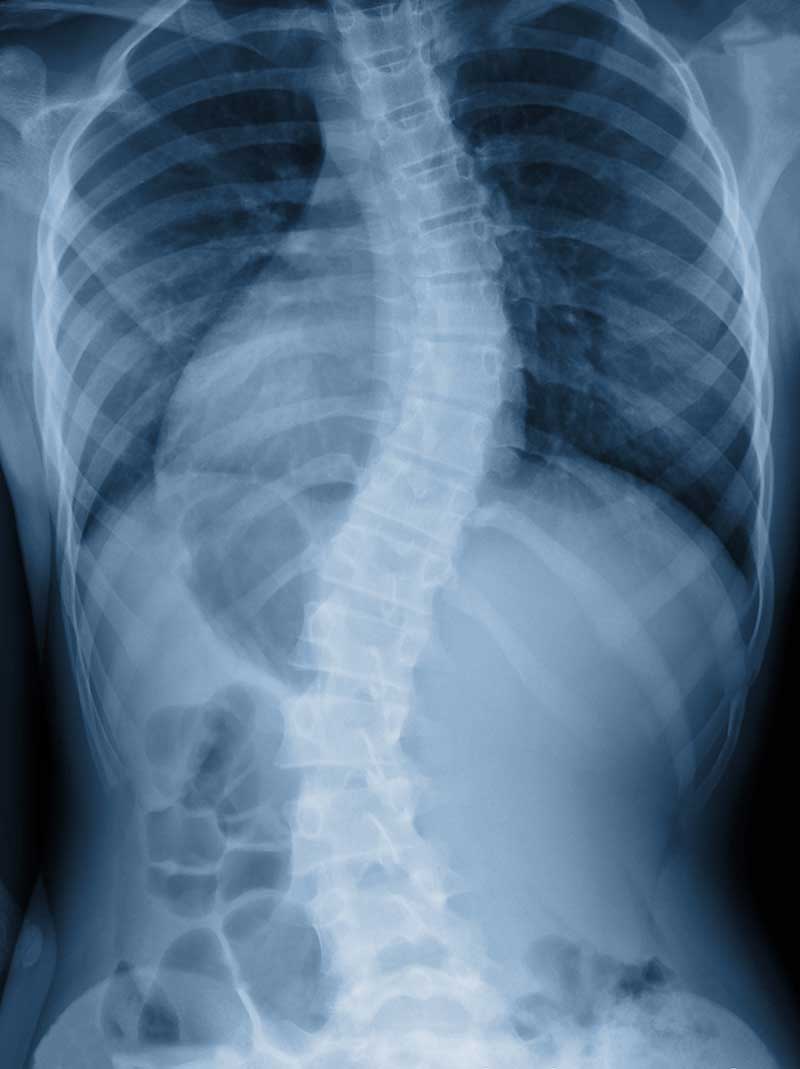
Scoliosis is an abnormal lateral curvature of the spine. Instead of running straight from top to bottom when viewed from behind, a scoliotic spine curves to the side, and in many cases also rotates along its vertical axis. The combination of lateral bend and rotation is what gives scoliosis its characteristic appearance and what makes it mechanically complex to manage.
The most common form is idiopathic scoliosis, which means the cause is unknown. It most often develops during adolescence, typically between ages 10 and 15, and is more common in girls. Adults can also develop scoliosis as a result of degenerative changes in the spine over time, a form called degenerative or de novo scoliosis that tends to emerge after 40.
Curves are measured in degrees using an X-ray measurement called the Cobb angle. Mild curves are generally under 20 degrees. Moderate curves fall between 20 and 40 degrees. Severe curves exceed 40 degrees and are the ones where surgical intervention may be discussed. For most scoliosis patients, the concern isn’t the curve itself but the pain, stiffness, and functional limitations that come with it over time.
Why Scoliosis Causes Pain
The pain associated with scoliosis doesn’t usually come from the curvature itself in a direct sense. It comes from the mechanical consequences of that curvature. When the spine curves abnormally, the muscles on one side work harder than the other to keep the body upright. Over time that asymmetrical demand creates chronic tension, fatigue, and inflammation in the overworked muscle groups.
The facet joints on the compressed side of the curve are also under more load than they should be, which contributes to joint degeneration and localized pain. In more significant curves, nerve roots can be compressed as the rotational component of the spine alters the space through which those nerves exit. That’s when pain patterns start radiating into the arms or legs rather than staying localized to the back.
What Chiropractic Care Can Actually Do for Scoliosis
Being honest about what chiropractic can and can’t accomplish for scoliosis matters. It cannot correct the curvature. There is no adjustment technique that straightens a scoliotic spine. Patients who come in expecting their curve to be reduced are going to be disappointed, and setting that expectation clearly is part of how this practice approaches care.
What chiropractic can do is address the functional and painful consequences of the curvature, and that’s where real quality-of-life improvement happens for most scoliosis patients.
Reducing Joint Restriction and Improving Mobility
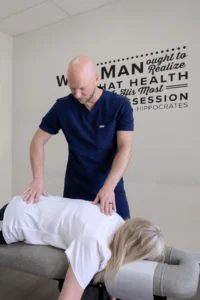
Scoliosis creates segments of the spine that become chronically restricted due to the asymmetrical loading. Chiropractic adjustments target those restricted joints to restore as much normal movement as possible. Patients often notice that their range of motion improves and that the stiffness they’ve been managing on a daily basis becomes less constant.
Reducing Muscle Tension on the Compressed Side
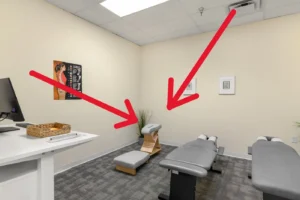
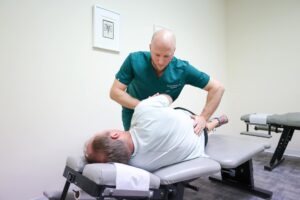
The intersegmental traction table that begins every session at Sitzmann Chiropractic is particularly useful for scoliosis patients. The rolling motion works along the full length of the spine and provides a gentle decompression that eases the chronic muscle tension that builds on the compressed side of the curve. Most scoliosis patients find this pre-adjustment treatment noticeably helpful on its own.
Managing Pain Without Medication
For scoliosis patients who have been managing daily discomfort with over-the-counter pain medication, consistent chiropractic care often reduces the baseline pain level enough that medication is needed less frequently. The goal is not to eliminate pain entirely in all cases, but to bring it to a manageable level through regular structural maintenance rather than chemical suppression.
Slowing Compensatory Changes
When the spine compensates for a curve, the areas above and below it start to change their own alignment to keep the head level. Over years, those compensatory changes can create their own pain patterns in areas that weren’t originally affected. Regular chiropractic care helps maintain as much function as possible in those compensating regions, which can slow the development of secondary problems over time.
Scoliosis in Adults Versus Adolescents
The approach to chiropractic care differs depending on whether the patient is an adolescent with idiopathic scoliosis or an adult dealing with degenerative scoliosis or a curve that has progressed since childhood.
For adolescent patients, the spine is still developing, which means consistent maintenance care during the growth years can be an important part of managing how the curve behaves over time. The goal is to keep the spine as functional as possible during a period when the curve has the most potential to progress. Dr. Sitzmann adapts technique for younger patients and uses appropriately gentle force throughout.
For adult patients, the focus is more on pain management, joint preservation, and quality of life. Degenerative scoliosis in particular tends to produce significant localized pain in the lumbar region, and chiropractic care aimed at keeping those lumbar segments as mobile as possible can meaningfully reduce daily discomfort.
If back pain is a significant part of your scoliosis picture, the back pain page covers how chiropractic addresses spinal pain more broadly. And if you’re dealing with nerve-related symptoms from your curve, the sciatica page explains the nerve compression patterns that sometimes develop alongside scoliosis.
What to Expect at a Scoliosis Evaluation
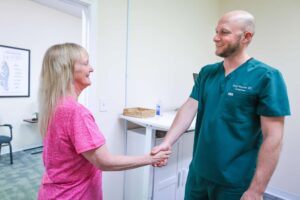
When a scoliosis patient comes into Sitzmann Chiropractic in Lincolnton, Dr. Sitzmann starts with a thorough conversation about the history of the diagnosis, how the curve has been monitored, what symptoms the patient is currently experiencing, and what their daily life looks like. If you have prior imaging showing the Cobb angle measurement, that information is helpful to bring along.
The evaluation includes a postural assessment, range of motion testing, and a hands-on examination of the spinal segments to identify where restriction and tension are concentrated. From there, Dr. Sitzmann will give you an honest assessment of what chiropractic can realistically address and build a care plan around those goals.
You can find more information about how this practice approaches scoliosis on the scoliosis page, or explore the full Our Method page to understand how care is structured at this Lincolnton practice.
Frequently Asked Questions
Can chiropractic stop my scoliosis from getting worse?
Chiropractic care cannot guarantee that a curve won’t progress, particularly in adolescent patients during growth spurts. What it can do is keep the spine as functional as possible, reduce compensatory patterns, and support overall spinal health. Curves that are well-managed tend to cause fewer secondary problems over time than curves that are left entirely unaddressed.
Is chiropractic safe for scoliosis?
Yes, when performed by a chiropractor who understands scoliosis mechanics and adapts technique appropriately. Dr. Sitzmann evaluates the specific characteristics of each patient’s curve and adjusts the approach accordingly. There is no one-size-fits-all adjustment protocol for scoliosis patients.
Should I still see my orthopedist if I’m getting chiropractic care for scoliosis?
Yes. Chiropractic care and orthopedic monitoring work alongside each other rather than replacing one another. Regular imaging to track curve progression is still important, especially for adolescent patients. Dr. Sitzmann is transparent about when a situation warrants additional evaluation outside of chiropractic care.
Living With Scoliosis Doesn’t Have to Mean Living With Daily Pain
If scoliosis has been a source of chronic back pain or stiffness and you haven’t explored what chiropractic maintenance care could do for your quality of life, it’s worth a conversation. Call Sitzmann Chiropractic in Lincolnton at (980) 284-2525 or schedule online to book your evaluation.