
Every spring, the same pattern plays out in Lincolnton and across Lincoln County. The weather turns, the yard calls, and people who spent the winter largely sedentary suddenly spend a full Saturday shoveling, raking, mulching, and bending. By Sunday morning, their back is a wreck. Sitzmann Chiropractic sees a reliable spike in back pain patients every spring, and most of them are dealing with completely preventable injuries that chiropractic care can help address quickly.
Why Yard Work Is So Hard on Your Spine
Yard work looks simple. It’s just bending and lifting, right? The problem is that the specific movement patterns involved in common yard tasks are some of the most mechanically demanding things the lumbar spine has to deal with, especially when done repeatedly over several hours by someone who hasn’t been doing much physical activity since October.
The Bending and Twisting Combination
Bending forward at the waist while simultaneously rotating to one side, which is exactly what you do when you rake, shovel, or turn compost, creates a combination of compressive and rotational forces on the lumbar discs and facet joints. Either movement alone is manageable. Together, they’re the most common mechanism for lumbar sprains, disc irritation, and acute joint locking that chiropractors treat.
Sustained Forward Flexion
Planting, weeding, and edging all require extended time bent forward at the waist. That sustained flexion position puts the posterior lumbar muscles under constant eccentric load, meaning they’re working hard to prevent you from falling forward rather than producing movement. After an hour of this, those muscles are fatigued in a way that gym work doesn’t really prepare you for. The next morning, they’re inflamed and letting you know about it.
Lifting Without Thinking
Bags of mulch, potting soil, and pavers are heavier than they look. Most people don’t shift into a proper lifting posture when they’re in yard mode. They bend at the waist, grab the bag, and straighten up. Do that ten times in a row and you’ve put significant compressive load on the lumbar discs at exactly the angle most likely to irritate them.
The Deconditioning Factor
This is the piece most people overlook. After a winter of reduced activity, the stabilizing muscles of the core and lumbar spine are not at their working capacity. The spine is not conditioned for the demands of a full day in the yard. That gap between what you’re asking your back to do and what it’s currently prepared to handle is where injuries happen.
What’s Actually Going On When Your Back Gives Out After Yard Work
Most spring yard work back injuries fall into a few categories, and knowing which one you’re dealing with changes how quickly it resolves.
A lumbar muscle strain is the most common. The posterior muscles of the lower back are overstretched or torn at the micro level, creating inflammation and protective spasm. It feels like a deep ache that’s worse with movement and better with rest. Most strains resolve within a week or two with appropriate care.
Facet joint irritation happens when the small joints at the back of the lumbar vertebrae are compressed or torqued beyond their comfortable range. This tends to produce a sharper, more localized pain on one or both sides of the lower back. It often creates a sensation of the back being locked up and difficulty straightening fully.
Disc irritation is less common from yard work alone but can happen, particularly in someone who already had some disc vulnerability. If the pain radiates into the buttock or down one leg alongside the back pain, that’s worth paying attention to as it may indicate nerve involvement rather than purely muscular or joint injury.
What to Do in the First 48 Hours
The first instinct for most people is to rest completely. That’s not wrong in the first day or two, but extended bed rest actually slows recovery for most back injuries. Gentle movement, staying out of the positions that provoked the injury, and avoiding heavy lifting are sensible. Ice for the first 24 to 48 hours can help manage acute inflammation.
If the pain is severe, if you’re having numbness or tingling in a leg, or if you can’t stand upright at all, those are signs to get evaluated promptly rather than waiting it out. Most straightforward spring back injuries don’t present that way, but it’s worth knowing when the situation warrants more urgent attention.
How Chiropractic Care Helps You Recover Faster
Chiropractic care addresses yard work back injuries by targeting what’s actually structurally wrong rather than just managing the pain. When the facet joints are irritated or the lumbar vertebrae have shifted under the mechanical load of yard work, the surrounding muscles go into protective spasm to stabilize the area. That spasm is painful and limits movement, but it won’t release fully until the underlying joint restriction is addressed.
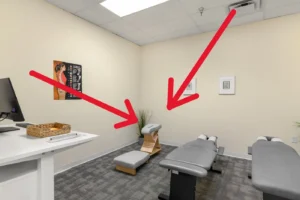
An adjustment to the affected lumbar segments restores proper joint movement, which reduces the protective spasm and allows the muscles to relax. Most patients notice significant improvement within one to three visits for a straightforward yard work strain. The intersegmental traction table that begins every session at Sitzmann Chiropractic is particularly helpful for acute lumbar injuries because the gentle rolling motion loosens the entire lower back before the hands-on adjustment work begins.
For more on how chiropractic approaches back pain generally, the back pain page covers the full picture. If you’re dealing with any leg pain or nerve symptoms alongside your back pain, the sciatica page is worth a read as well.
How to Protect Your Back the Next Time You’re in the Yard
A few simple habits make a meaningful difference in whether you pay for a productive yard day with a week of back pain.
Warm up before you start. Five to ten minutes of walking and gentle movement before picking up a rake is not overkill. You wouldn’t run a 5K without warming up first, and sustained yard work is a similar physical demand on your spine.
Break it up. Two hours of yard work with a fifteen-minute break is significantly easier on the lumbar spine than four straight hours. The muscles and joints get a recovery window and perform better across the full session.
Lift correctly. Square your feet to what you’re picking up, hinge at the hips rather than rounding at the waist, and keep the load close to your body. It takes a few seconds longer. It’s worth it.
Rotate your activities. Alternate between tasks that require different postures. Do twenty minutes of raking, switch to something that lets you stand upright, then go back. Sustained single-position work accumulates stress faster than varied movement.
Frequently Asked Questions
How quickly can chiropractic help after a yard work injury?
For most straightforward lumbar strains and facet joint irritations, patients notice meaningful improvement within the first one to three visits. The sooner you come in after the injury, the faster the recovery tends to be. Waiting a week while hoping it resolves on its own often means the surrounding muscles have tightened further and the recovery takes longer.
Should I come in even if the pain is manageable?
Yes. Manageable pain is still a signal that something in the lumbar spine is irritated or restricted. Addressing it early prevents the compensation patterns that develop when the body works around an unresolved injury. Those secondary compensations often cause more problems than the original strain.
Is it normal for back pain to show up the day after yard work rather than during it?
Very normal. Inflammatory responses often peak 24 to 48 hours after the provoking activity, which is why you feel fine while you’re in the yard and then can barely get out of bed the next morning. That delayed onset is typical for muscular and joint injuries and doesn’t change the underlying mechanism or how it should be treated.
Your Back Worked Hard This Weekend. Give It Some Help.
If spring yard work has left you with back pain in Lincolnton, NC, don’t wait it out and hope for the best. Call Sitzmann Chiropractic at (980) 284-2525 or schedule online to get on the schedule.