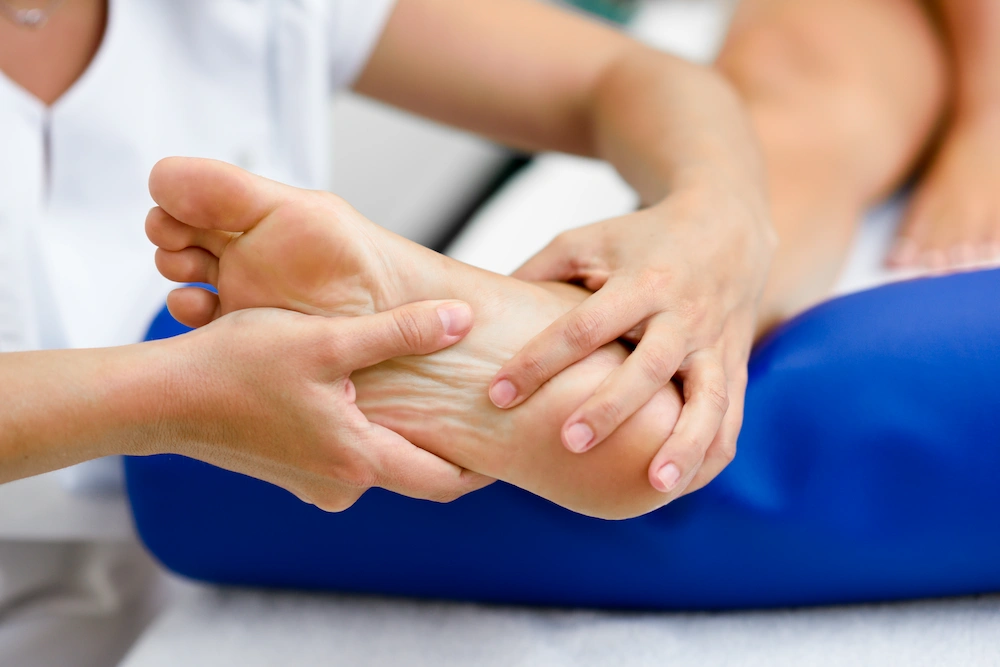
If the first steps out of bed each morning send a sharp, stabbing pain through your heel, you’re probably dealing with plantar fasciitis – one of the most common causes of chronic heel pain. What most patients don’t realize is that plantar fasciitis is rarely just a foot problem. At Sitzmann Chiropractic in Lincolnton NC, we address plantar fasciitis by looking at the whole mechanical chain: the foot itself, the ankle, the alignment of the hips and pelvis, and the way you actually walk. Adjusting the foot and ankle directly, combined with correcting the upstream mechanics driving the problem, is what tends to produce lasting relief.
What Plantar Fasciitis Actually Is
The plantar fascia is a thick band of connective tissue that runs along the bottom of your foot, from your heel bone to the base of your toes. It acts as a shock absorber and supports the arch of your foot with every step. When this tissue gets overloaded, inflamed, or develops small tears from repetitive stress, the result is plantar fasciitis – the chronic heel pain that’s especially sharp with the first steps in the morning or after periods of sitting.
The pain is usually worst on that first step because the plantar fascia tightens overnight while your foot is at rest. When you stand up and load it suddenly, the tight, inflamed tissue gets stretched abruptly – producing that stabbing pain in the heel. Once you’ve been walking for a few minutes and the tissue warms up, the pain usually reduces significantly.
Why It’s Not Just a Foot Problem
Here’s what most patients don’t hear: the plantar fascia gets overloaded for a reason. That reason is almost always mechanical, and it usually starts higher up the chain than the foot itself.
Pelvic Misalignment Changes How You Walk
If your pelvis is tilted, rotated, or uneven, you don’t walk symmetrically. One foot lands slightly harder than the other. Weight distributes unevenly across each step. Over thousands of steps a day, the foot bearing more load develops chronic overuse patterns – and the plantar fascia on that side gets progressively overloaded until it breaks down.
Spinal Alignment Affects Everything Below It
The spine is the central axis of your body. Misalignment in the lumbar spine or sacroiliac joints changes how force transmits through your legs when you walk. That altered force transmission ultimately shows up in the feet as abnormal loading patterns. Chiropractic adjustments to the lumbar spine and pelvis directly address this upstream contributor to foot pain.
Restricted Ankle Mobility Overloads the Fascia
If your ankle can’t dorsiflex properly (bend upward), your foot compensates by overpronating – collapsing inward – to complete each step. That overpronation stretches the plantar fascia beyond its normal range with every step, contributing directly to inflammation and micro-tearing.
Foot Joint Restriction
The foot has 26 bones and dozens of joints. When individual joints in the foot become restricted, the entire structure loses its ability to absorb shock and adapt to the ground. That absorbed shock has to go somewhere – and the plantar fascia often takes the brunt of it.
How Chiropractic Care Addresses Plantar Fasciitis
Direct Foot and Ankle Adjustments
Dr. Sitzmann performs adjustments to the small joints of the foot and ankle when they’re restricted. Restoring proper joint motion in these areas allows the foot to function as it was designed to – absorbing shock, adapting to the ground, and reducing the abnormal load on the plantar fascia. This is different from what most conventional treatments for plantar fasciitis address, and for many patients, it’s the missing piece.
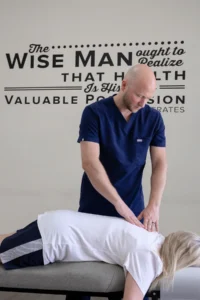
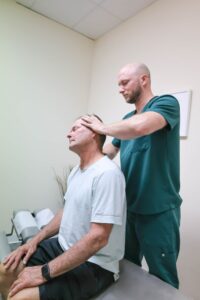
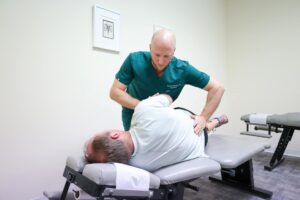
Pelvic and Spinal Corrections
Alongside the foot and ankle work, we address the upstream mechanical factors driving the problem. Adjustments to the pelvis, sacroiliac joints, and lumbar spine correct the asymmetrical loading patterns that were overloading the affected foot in the first place. This is the piece that tends to make results last, because it addresses why the plantar fascia was under so much stress to begin with.
Assessment of Gait and Compensation Patterns
Part of your first visit involves looking at how you actually stand and move. Compensation patterns that developed to protect the painful foot often persist even after the pain reduces – and they set you up for the problem to return unless addressed. Learn more about how we approach joint pain at our Lincolnton practice.
Preparation with Intersegmental Traction
Every session at our Lincolnton office starts on our intersegmental traction table, which gently mobilizes the lumbar spine before the hands-on work. This reduces the muscle tension around the pelvis and lower back that often contributes to the gait patterns driving plantar fasciitis. Read about our full session approach here.
What You Can Do at Home
A few things tend to help while you’re working through care:
Morning Warm-Up Before Standing
Before you get out of bed, gently point and flex your foot 10 to 20 times. Roll your ankle in circles. This warms up the plantar fascia gradually so that first step isn’t a shock to cold, tight tissue.
Calf Stretches
The calf muscles connect to the plantar fascia through the Achilles tendon. Chronically tight calves contribute to plantar fascia tension. Gentle standing calf stretches, held for 30 seconds and done a few times a day, help reduce this pull on the fascia.
Rolling the Foot
Rolling the bottom of your foot over a frozen water bottle or a lacrosse ball provides both mobilization and inflammation reduction. Do it for 5 minutes a couple times a day – it’s simple and often produces noticeable relief.
Supportive Footwear
Walking barefoot on hard floors or wearing unsupportive shoes places extra stress on the plantar fascia. Supportive footwear with proper arch support – even inside the house – can reduce the daily load significantly.
Avoid Prolonged Standing on Hard Surfaces
If your work involves standing all day on concrete or tile, that alone can perpetuate plantar fasciitis. Anti-fatigue mats, supportive footwear, and taking regular sitting breaks help reduce the constant load.
Why Rest Alone Usually Doesn’t Fix It
Many patients try to solve plantar fasciitis by resting – reducing activity, staying off the foot as much as possible, and waiting for it to heal. It rarely works, and here’s why: the underlying mechanical dysfunction driving the problem doesn’t change just because you’re moving less. As soon as you return to normal activity, the same loading patterns reappear and the fascia gets stressed all over again.
Rest can be useful during an acute flare to let inflammation calm down. But without addressing why the fascia was being overloaded in the first place, rest is a temporary fix at best.
Frequently Asked Questions
How long does chiropractic care take to help plantar fasciitis?
Most patients notice meaningful improvement within the first few weeks of consistent care. Chronic cases that have been building for years may take longer, but the trend is usually clear early on.
Do I need custom orthotics?
Not always. Some patients benefit from over-the-counter arch supports, some do well with proper footwear alone, and some need custom orthotics. This is something we’ll discuss based on your specific gait and foot structure.
What if I’ve had heel spurs diagnosed on imaging?
Heel spurs often coexist with plantar fasciitis but aren’t usually the source of the pain. The plantar fascia inflammation is typically what’s producing symptoms, and addressing that mechanically often resolves the pain even when the spur remains on imaging.
Can I keep exercising while I’m being treated?
Usually yes, with modifications. Low-impact activities like swimming, cycling, or elliptical work are generally well-tolerated. High-impact activities like running may need to be reduced during the acute phase.
If heel pain has been making mornings miserable and simple foot stretches aren’t getting you anywhere, the answer is often higher up the chain than the foot itself. Schedule online at our Lincolnton NC office or call us at (980) 284-2525.