If your headaches always seem to start at the base of your skull and wrap up over your head, you’re probably not dealing with a migraine – even if that’s what you’ve been told. What you likely have is a cervicogenic headache: a specific type of headache that originates in the upper cervical spine and refers pain up into the head. At Sitzmann Chiropractic in Lincolnton NC, this is one of the most commonly missed headache diagnoses we see. The good news is that once it’s properly identified, cervicogenic headaches respond exceptionally well to chiropractic care.
What a Cervicogenic Headache Actually Is
The term “cervicogenic” literally means “originating in the neck.” A cervicogenic headache is a headache whose source is dysfunction in the upper cervical spine – specifically the joints, muscles, and nerves in the top few vertebrae of your neck.
Here’s the mechanism: the nerves from the top three cervical vertebrae share pathways in the brainstem with the nerves that supply sensation to the head and face. When there’s irritation, misalignment, or restricted motion in those upper cervical joints, the pain signal generated there gets referred up into the head. Your brain interprets the pain as coming from your head, even though the actual source is your neck.
That’s why cervicogenic headaches often feel identical to what people assume are tension headaches or migraines. Same throbbing, same pressure, sometimes even the same sensitivity to light. But the treatment is completely different because the source is different.
The Signs That Point to Cervicogenic
A few specific patterns strongly suggest your headache is cervicogenic rather than migraine or true tension-type:
The Pain Starts in the Neck or Base of the Skull
This is the most reliable indicator. If you can consistently point to where the headache begins – and it’s at the base of your skull, in your upper neck, or behind an ear – that’s a cervicogenic pattern. Migraines and true tension headaches usually don’t have a clear starting point in the neck.
Certain Neck Movements Trigger or Worsen the Headache
Turning your head to check a blind spot, looking up for a prolonged period, or holding your head in a fixed position (like at a computer) reliably triggers or worsens the headache. If a specific neck movement predictably brings the pain on, you’re dealing with a cervical source.
Pressure on the Upper Neck Reproduces the Headache
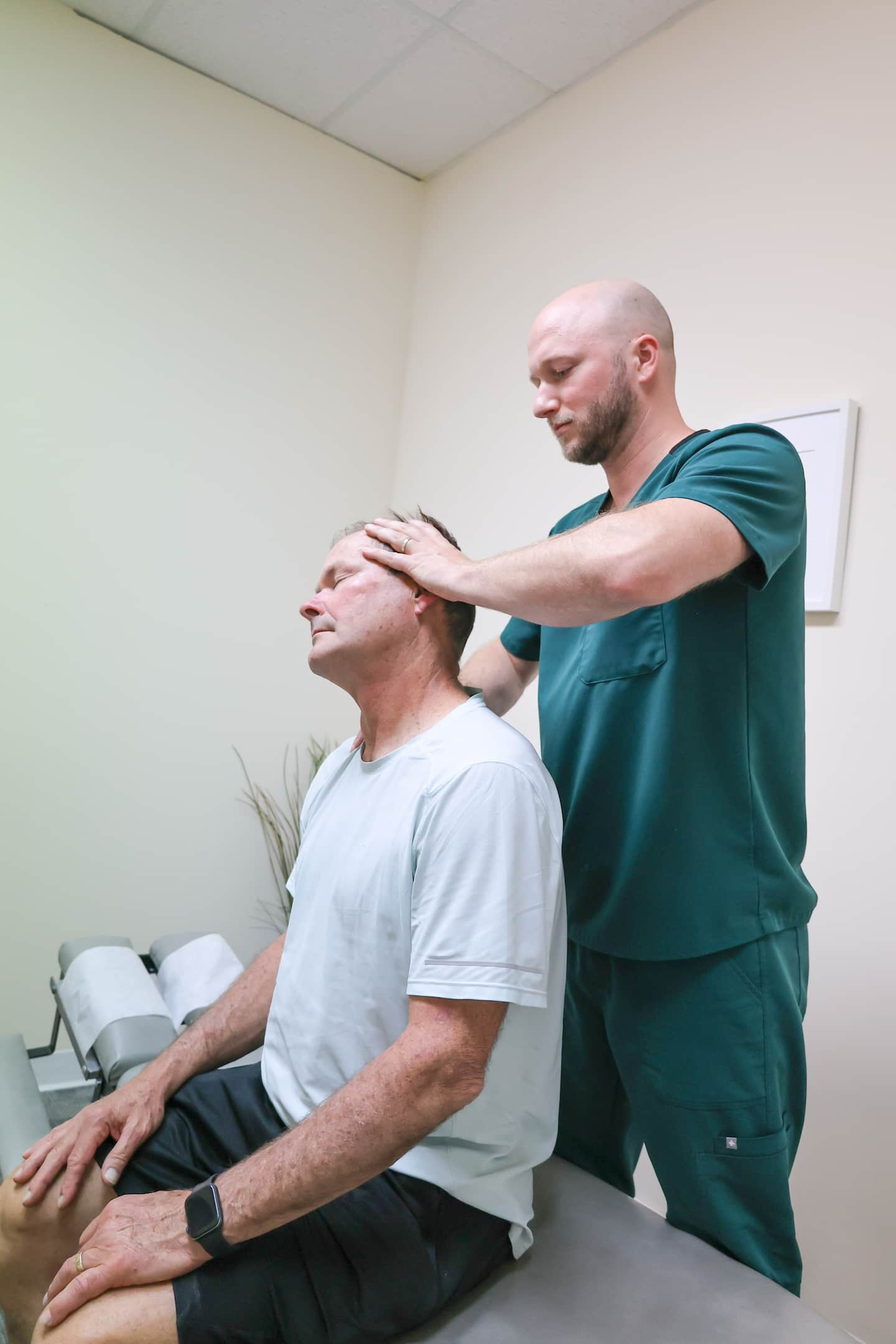
If pressing on specific spots in your upper neck or the base of your skull triggers or intensifies the headache, that’s a strong indication of cervicogenic origin. This is one of the assessments we perform during a chiropractic evaluation.
The Headache Is Usually One-Sided
Cervicogenic headaches typically affect one side of the head, though they can occasionally switch sides. They rarely present as a symmetrical band around the whole head the way tension headaches sometimes do.
Neck Stiffness Comes with the Headache
If your headache is almost always accompanied by neck stiffness or reduced neck range of motion, that’s another strong cervicogenic indicator. In a migraine, neck stiffness may occur but usually isn’t the defining feature.
Why It Gets Misdiagnosed So Often
Cervicogenic headaches share so many symptoms with migraines and tension headaches that they’re routinely misdiagnosed. Patients get prescribed migraine medications that don’t work. Others are told they have chronic tension headaches and advised to reduce stress. Neither approach addresses the mechanical dysfunction in the upper cervical spine that’s actually generating the pain.
The result is a lot of frustrated patients cycling through medications, stress management strategies, and lifestyle changes that don’t produce meaningful relief – because none of it is treating the real source of the problem.
You can read more about how we approach headaches and migraines at our Lincolnton practice.
What Causes Cervicogenic Headaches
Forward Head Posture
The most common contributor. Hours spent looking at phones, computers, and screens push the head forward from its neutral position. For every inch of forward drift, the muscles at the base of the skull have to work exponentially harder to hold the head up. That chronic muscle tension compresses the upper cervical joints and irritates the local nerves – creating the perfect conditions for cervicogenic headaches.
Whiplash and Neck Injuries
Any injury that has previously stressed the cervical spine – car accidents, sports injuries, falls – can leave residual joint dysfunction that generates cervicogenic pain long after the initial injury seemed to resolve.
Chronic Neck Tension
Ongoing tightness in the neck and upper back muscles, whether from stress, poor sleep positions, or overuse, contributes directly to the joint restriction that produces these headaches.
Upper Cervical Joint Restriction
Sometimes the joints simply lock up without a clear cause – a bad sleep position, an awkward turn of the head, sustained tension – and the pattern becomes chronic if the restriction isn’t addressed.
What Chiropractic Care Does
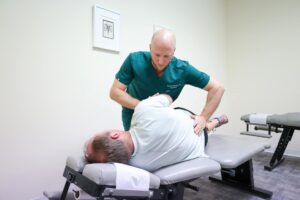
Chiropractic care is one of the most effective interventions for cervicogenic headaches because it directly addresses the source. Adjustments to the upper cervical spine restore proper joint motion, reduce nerve irritation, and allow the chronically tight muscles at the base of the skull to actually release.
Most patients notice significant improvement within the first few weeks of consistent care. The frequency of headaches decreases, the intensity drops, and many patients eventually reach the point where the headaches stop entirely as long as they maintain reasonable posture and address flare-ups when they occur.
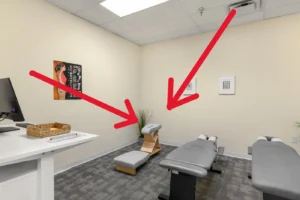
Every session at our Lincolnton office starts with our intersegmental traction table, which gently loosens the cervical spine before the hands-on adjustment – especially helpful for patients who come in with significant neck stiffness from cervicogenic headaches. You can read about our full session approach here. Addressing chronic neck pain and tension is usually part of the same care plan.
What You Can Do at Home
A few habits reduce the frequency and severity of cervicogenic headaches while you’re working through care. Setting up your workstation so your screen is at eye level. Taking short breaks every 30 to 45 minutes if you sit for work. Using a supportive pillow that keeps your neck in a neutral position while you sleep. Being conscious about phone posture – lifting the phone to eye level instead of dropping your head to look down at it. None of these fix the underlying dysfunction, but they reduce the daily forces that reinforce it.
Frequently Asked Questions
Can I have both migraines and cervicogenic headaches?
Yes. Some patients have both types, and figuring out which headache is which becomes part of the evaluation. Cervicogenic headaches tend to have identifiable neck triggers; migraines often don’t. Addressing the cervicogenic component can reduce your overall headache load significantly even if some true migraines remain.
How quickly will chiropractic help?
Most patients notice a reduction in headache frequency or intensity within the first few weeks of consistent care. Complete resolution takes longer for patients with chronic patterns, but the trend is usually clear early on.
Will I need medication if I do chiropractic?
Many patients find they need significantly less headache medication once the cervicogenic source is being addressed. Any medication decisions should involve your prescribing doctor.
If your headaches keep starting in the same spot in your neck and nothing you’ve tried has helped, the source might be exactly where you’re feeling it start. Schedule online at our Lincolnton NC office or call us at (980) 284-2525.