If you’re a side sleeper waking up with aching hip pain – the kind that’s deep, dull, and won’t go away until you’ve been moving for an hour – the problem is probably not your mattress. At Sitzmann Chiropractic in Lincolnton NC, this is one of the most common complaints we hear from patients who’ve spent months trying new pillows, new mattresses, and different sleeping positions without real relief. The actual cause is usually mechanical, involving the sacroiliac joints, pelvic alignment, or referred pain from the lumbar spine – and once it’s properly identified, it tends to respond well to chiropractic care.
Why Side Sleeping Reveals Hip Problems That Standing Doesn’t
Here’s something that surprises a lot of patients: hip pain that only shows up when you’re sleeping on your side often isn’t really a hip joint problem at all. When you’re standing or walking, your weight is distributed across both legs, the muscles around the hip and pelvis are actively stabilizing you, and any underlying joint dysfunction gets buffered by all that active support.
When you lie on your side, all of that changes. The full weight of your upper body now presses down through one hip into the mattress. The muscles relax. Any joint dysfunction, alignment issue, or soft tissue irritation that was being compensated for during the day suddenly has nothing buffering it. That’s why the pain shows up at night even when daytime feels fine.
The position itself isn’t the problem. The underlying mechanical issue is the problem. Side sleeping just exposes it.
The Most Common Mechanical Causes
Sacroiliac Joint Dysfunction
This is the one we see most often, and it’s frequently misdiagnosed as hip pain. The sacroiliac joints connect your pelvis to the base of your spine, one on each side. When one of those joints is misaligned or moving improperly, it produces a deep ache in the back of the hip and buttock area that gets worse with prolonged pressure – exactly what side sleeping creates.
Most patients describing “hip pain at night” are actually feeling SI joint pain. The distinction matters because the treatment is different. Chiropractic adjustments to the lumbar spine and pelvis address SI joint alignment directly, which is something orthopedic hip evaluations don’t typically focus on.
Pelvic Misalignment
Even without classic SI joint dysfunction, a pelvis that’s tilted, rotated, or unevenly aligned places asymmetrical pressure on the hips when you sleep on your side. One hip ends up bearing more load than the other. The muscles around the higher-pressure hip stay tense even during sleep. Over time, this produces the chronic aching that wakes patients up at 3 AM.
Referred Pain From the Lumbar Spine
The nerves that supply the hip area exit the lumbar spine. If there’s irritation at the nerve roots in the lower back – from disc compression, joint dysfunction, or muscle spasm – the resulting pain can refer into the hip region and feel like it’s coming from the hip itself. This is closely related to sciatica, though the pattern is more localized and doesn’t always travel down the leg.
Bursitis and Tendon Irritation
The greater trochanteric bursa – a fluid-filled sac on the outside of the hip – can become inflamed and produce sharp lateral hip pain when pressed against a mattress. Same with the IT band and surrounding tendons. While these conditions exist on their own, they’re often secondary to the alignment issues described above. When the pelvis isn’t level and gait is asymmetrical, the tissues on one side get chronically overworked, and the bursitis or tendon irritation develops as a downstream effect.
Why a New Mattress Probably Won’t Fix It
If you’ve spent money on a new mattress and the hip pain didn’t go away, you’re not alone. Patients often try this before coming in, and the result is usually disappointing.
A better mattress can reduce pressure on the hip – which is genuine help – but it can’t correct underlying joint misalignment, pelvic asymmetry, or nerve irritation. If those mechanical problems are still present, the hip pain will keep showing up regardless of what’s underneath you. The mattress was never the cause.
A pillow between the knees can also help temporarily by keeping the pelvis more neutral while you sleep. It’s a reasonable thing to try and we sometimes recommend it as a supportive measure. But again, it’s addressing the symptom rather than the underlying issue.
What Chiropractic Care Does for Side-Sleeping Hip Pain
The first step is identifying which of the underlying causes is actually driving your symptoms. We assess the lumbar spine, the sacroiliac joints, the pelvis, and the hip itself to figure out where the dysfunction is. That assessment shapes everything about the care plan.
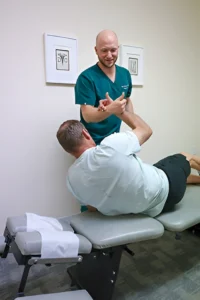
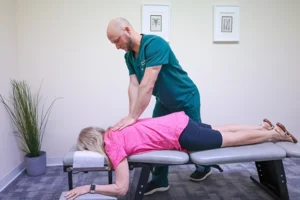
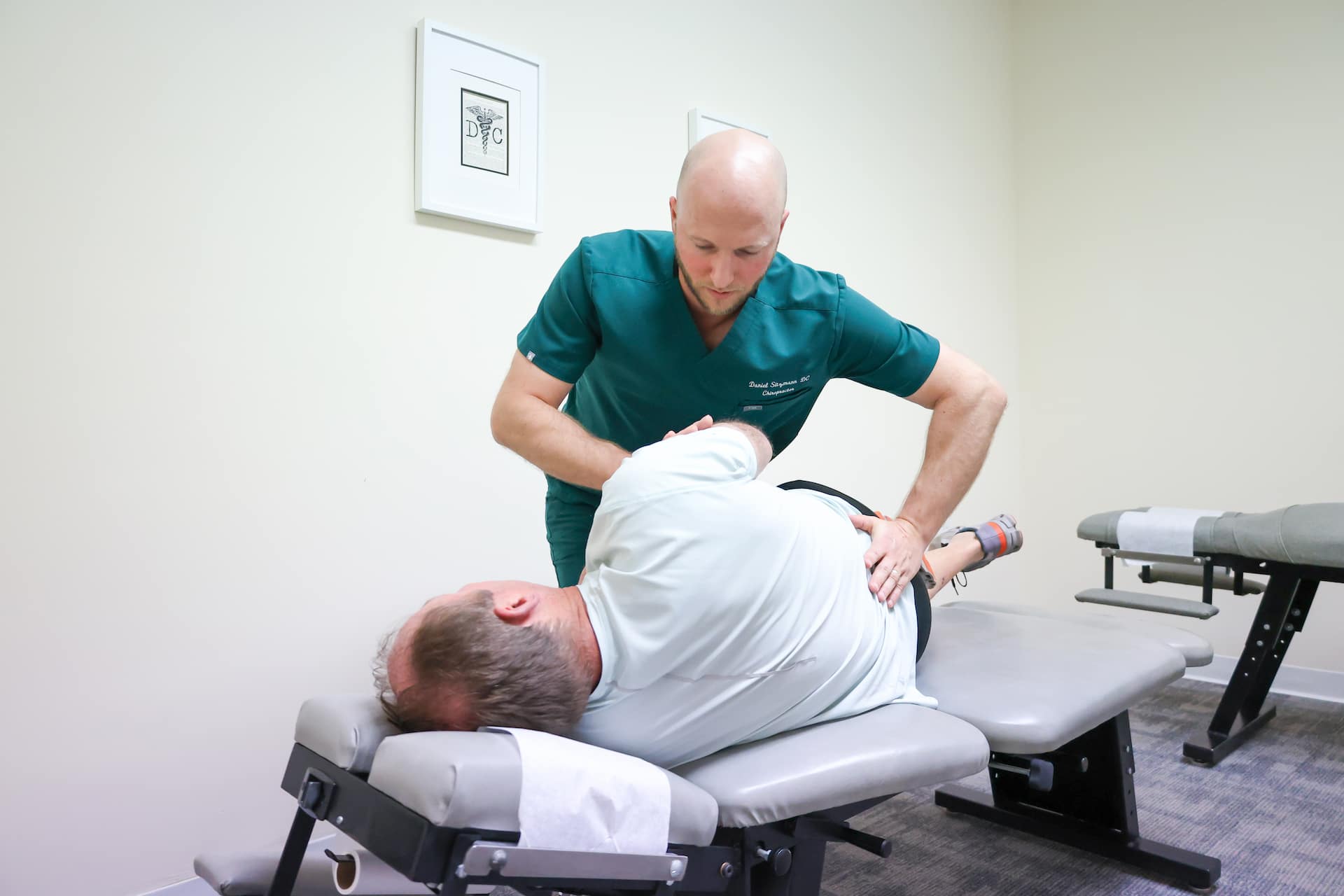
From there, treatment usually involves adjustments to restore proper alignment in the lumbar spine and pelvis, address sacroiliac joint dysfunction, and reduce nerve irritation contributing to the referred pain. We also evaluate muscle tension patterns and work to release the chronic tightness that builds up around a misaligned pelvis.
Every session at our Lincolnton office starts with our intersegmental traction table, which gently mobilizes the lumbar spine and reduces muscle guarding before the hands-on adjustment. For patients dealing with chronic hip and joint pain, this preparation phase makes the session significantly more comfortable and effective. You can read about our full session approach here.
What You Can Do at Home in the Meantime
A few things tend to help while you’re working through care. Sleeping with a pillow between your knees keeps your pelvis more level and reduces strain on the SI joints overnight. Avoiding sleeping with your top leg crossed over the bottom one prevents the rotational stress that aggravates pelvic dysfunction. And during the day, paying attention to how you stand – especially avoiding the habit of putting all your weight on one leg while standing in line or at the kitchen counter – reduces the asymmetrical loading that contributes to the problem.
None of these are a fix on their own, but they reduce the daily forces working against the corrections we make in care.
When Hip Pain Warrants More Than Chiropractic
If your hip pain is accompanied by significant swelling, fever, inability to bear weight on the leg, or pain that’s getting rapidly worse rather than holding steady, that’s a situation that warrants medical evaluation before chiropractic care. The same goes if you’ve had a recent fall or injury that could have produced a fracture. We’ll always tell you honestly if your presentation suggests something outside of what chiropractic care addresses.
For the much more common situation – dull aching hip pain that’s been present for weeks or months, worse at night, with no specific injury behind it – chiropractic care is often exactly the right starting point.
Frequently Asked Questions
Could this be arthritis in my hip?
It’s possible, especially if you’re over 50 or have other arthritic joints. But many patients who assume they have hip arthritis turn out to have SI joint dysfunction that responds well to care. An assessment helps clarify which is happening.
Should I stop sleeping on my side?
Not necessarily. Once the underlying mechanical issue is addressed, side sleeping is usually fine. The goal is fixing the cause, not avoiding a normal sleep position for the rest of your life.
How long does it take to feel better?
For most patients with side-sleeping hip pain from SI or pelvic issues, meaningful improvement happens within the first few weeks of care. Chronic cases take longer, but the trend is generally positive when consistency is maintained.
If hip pain has been waking you up at night, the cause is almost always identifiable and addressable. Schedule online at our Lincolnton NC office or call us at (980) 284-2525.