
If you’ve been dealing with chronic shoulder pain that gets labeled “rotator cuff” by everyone who looks at it, but rest, ice, and stretching aren’t producing results, the issue is almost always bigger than the rotator cuff itself. At Sitzmann Chiropractic in Lincolnton NC, we treat shoulder pain regularly – and the piece most patients have never had addressed is the cervical spine connection. The nerves controlling your shoulder originate in your neck, which means shoulder pain that won’t resolve often points to dysfunction higher up the chain.
What the Rotator Cuff Actually Is
The rotator cuff isn’t one single structure. It’s a group of four muscles and their tendons that surround the shoulder joint and keep the upper arm bone (humerus) seated correctly in the shoulder socket. These muscles let you lift, rotate, and reach – the full range of motion that makes the shoulder the most mobile joint in the body.
When something goes wrong with the rotator cuff, it’s typically one of a few patterns: tendon irritation or inflammation (tendinopathy), impingement (the tendon getting pinched against overlying bone), partial tearing, or in more severe cases, a complete tear. These issues produce pain with reaching, lifting, sleeping on the affected side, and sometimes just hanging the arm at rest.
Why Rest and Ice Alone Often Don’t Work
Rest reduces inflammation. Ice reduces inflammation. Both can give you temporary relief. But neither addresses why the rotator cuff got overloaded in the first place.
If the mechanical reason the rotator cuff was getting stressed is still there – and it usually is – the pain comes right back the moment you return to normal activity. You can rest a shoulder for weeks, feel better, and have the pain reappear within days of using your arm normally again. That’s not a failure of rest. It’s a sign that rest wasn’t the right solution for your situation.
The Neck-Shoulder Connection Most People Miss
The nerves that control your shoulder muscles – including the rotator cuff – originate in the cervical spine. Specifically, nerve roots from C4 through C6 supply the shoulder region. When there’s compression or irritation at those nerve roots from a misaligned vertebra, disc bulge, or chronic muscle tension, the signals reaching the rotator cuff muscles are affected.
What does that look like in practice? Muscles that fire less powerfully than they should. Reduced coordination between the muscles that stabilize the shoulder. Compensation patterns where other muscles work harder to make up for weakened ones. Over time, the mechanical imbalance stresses the rotator cuff tendons – and the inflammation and pain show up in the shoulder, even though the real problem started in the neck.
This is why patients who’ve been treated for shoulder pain for months, had cortisone injections, done physical therapy, and still aren’t better often find relief once the cervical spine is addressed. The treatment they were getting wasn’t wrong – it was incomplete. Learn more about how cervical spine dysfunction affects the body.
Shoulder Mechanics That Often Need Addressing
Shoulder Blade Position
The shoulder blade (scapula) has to glide properly across the back of the ribcage for the rotator cuff to function normally. When the scapula is held in an abnormal position – often from chronic forward head posture or thoracic spine stiffness – the shoulder joint changes its angle of movement. The rotator cuff tendons get pinched against overlying bone with every lift. This pattern is called impingement.
Thoracic Spine Mobility
Your mid back (thoracic spine) needs to rotate and extend for the shoulder to work properly. Hours spent at a desk flatten and stiffen the thoracic spine, which forces the shoulder joint to make up for the lost motion. That extra workload wears the rotator cuff down over time.
Direct Shoulder Joint Restriction
The glenohumeral joint itself can become restricted, limiting normal motion and overloading specific tendons. Direct extremity adjustments restore that motion.
What Chiropractic Care Does for Rotator Cuff Issues
Our approach addresses the whole mechanical picture, not just the shoulder.
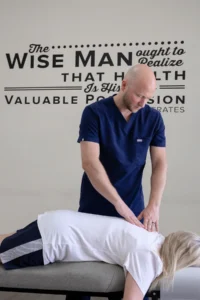
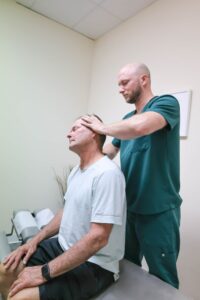
First, we evaluate the cervical spine for nerve root irritation or restriction that might be affecting shoulder muscle function. Adjustments to the upper and mid-cervical spine restore proper joint motion and reduce nerve pressure.
Second, we assess the thoracic spine for the stiffness that’s forcing the shoulder to compensate. Adjustments to the mid-back restore the rotation and extension your shoulder depends on.
Third, we look at the shoulder itself. Direct extremity adjustments to the shoulder joint, when appropriate, restore local joint motion. This takes pressure off the rotator cuff tendons and reduces impingement.
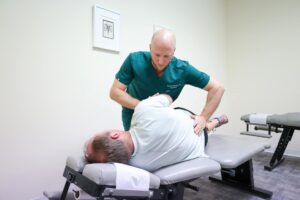
Every session at our Lincolnton office starts with our intersegmental traction table, which gently mobilizes the spine and reduces muscle guarding before any hands-on work. You can read about our full session approach. For patients who’ve had shoulder pain for months or years, the combination of spine work and direct shoulder care often produces the meaningful improvement they couldn’t get from any single approach.
What About Frozen Shoulder?
Frozen shoulder (adhesive capsulitis) is a related but distinct condition where the shoulder joint capsule becomes progressively stiffer and more painful. It often develops after a period of reduced shoulder use. Chiropractic care can help manage frozen shoulder, especially the muscle tension and compensatory patterns that develop around it, though the condition typically requires patience to fully resolve. We’ll be honest about what to expect based on your specific stage. Related information on joint pain and extremity care is available on our conditions page.
What to Try at Home
A few things help while you’re working through care. Avoid sleeping on the affected shoulder if possible – prop with pillows to keep the arm supported. Be mindful of overhead activities that reproduce the pain. Light pendulum exercises (letting the arm hang and gently swinging in small circles) can help maintain mobility without loading the tendons. Avoid aggressive stretching during flare-ups since it often makes things worse.
When Shoulder Pain Warrants Imaging or Surgery
Most chronic shoulder pain responds well to conservative care including chiropractic work. There are situations where imaging or surgical evaluation is appropriate: significant trauma that may have torn the rotator cuff completely, sudden loss of the ability to lift the arm, severe weakness that’s progressing rather than improving, or persistent severe pain that isn’t responding to conservative care over several months. We’ll tell you directly if your presentation suggests one of these needs further evaluation.
Frequently Asked Questions
How quickly does rotator cuff pain respond to chiropractic?
Many patients notice meaningful reduction in pain within the first few weeks of consistent care. Chronic cases that have been building for years take longer, but the trend is usually clear within the first month.
Will I need imaging first?
Not always. A thorough evaluation often gives us the information we need. If your presentation suggests imaging would change the care plan, we’ll say so.
What if I’ve already had cortisone injections?
Not a problem. Many patients come in after one or several cortisone shots that didn’t produce lasting relief. The injections typically address inflammation temporarily but don’t fix the underlying mechanical issue. That’s where our approach fits.
If shoulder pain has been affecting your sleep and daily activities, and the standard treatments haven’t gotten you anywhere, there’s often a mechanical component that’s been missed. Schedule online at our Lincolnton NC office or call us at (980) 284-2525.