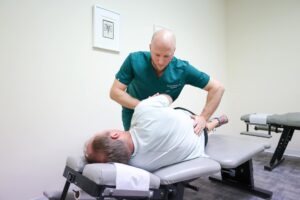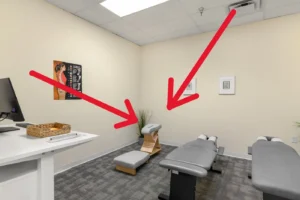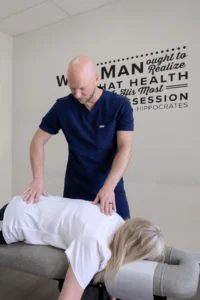
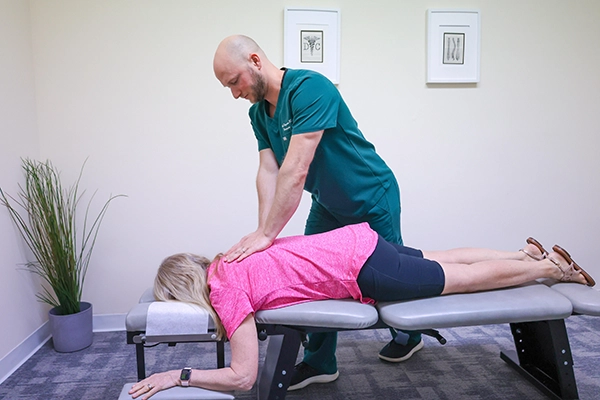
If you’ve ever been to Sitzmann Chiropractic in Lincolnton NC, you started your session on a table that gently rolls up and down your spine before the hands-on adjustment begins. That’s intersegmental traction – and while it feels like a pleasant warm-up, there’s real clinical purpose behind it. Understanding what it does helps explain why we use it with every patient, every visit.
What Intersegmental Traction Is
Intersegmental traction is a therapy delivered through a specialized table equipped with a roller mechanism underneath the surface. As you lie on your back, the rollers move slowly up and down the length of your spine, applying gentle, rhythmic pressure to the vertebrae and the soft tissue around them.
The word “intersegmental” refers to the spaces between spinal segments – the joints, discs, and surrounding ligaments that connect each vertebra to the next. Those are precisely the structures the roller table is designed to mobilize and influence.
It’s not a massage table, though the sensation can feel relaxing. The purpose isn’t muscle relaxation alone – it’s preparing the spine structurally for what comes next.
What It Actually Does to the Spine
Increases Disc Hydration
Spinal discs don’t have a direct blood supply. They get their nutrients through a process called imbibition – fluid is drawn in and pushed out as the disc is compressed and decompressed through movement. When the spine is sedentary, discs gradually lose hydration and become stiffer and more vulnerable to injury.
The rhythmic motion of intersegmental traction creates that compression-decompression cycle across every disc level it passes over. This draws fluid into the disc, improves nutrition, and increases the disc’s ability to absorb load. For patients dealing with herniated or bulging disc problems, that hydration effect matters. For everyone else, it’s a form of maintenance the discs don’t otherwise get from sitting at a desk or standing all day.
Mobilizes Spinal Joints
Restricted spinal joints – segments that have lost their normal range of motion – are stiffer and more resistant to adjustment. Intersegmental traction gently mobilizes those segments before the chiropractic adjustment, making the joint more receptive to correction. The end result is that the adjustment is both more effective and more comfortable.
Think of it like warming up before exercise. You could technically skip it, but the tissue responds better and the risk of discomfort is lower when the warm-up has been done first.
Reduces Muscle Guarding
When the spine is in pain or misaligned, the surrounding muscles contract protectively. That guarding is the body trying to stabilize the area, but it also makes the joints harder to move and the adjustment less effective. The traction table’s rhythmic motion signals the nervous system to reduce that protective tension – not by force, but by consistent, gentle input that the nervous system registers as safe.
Patients who come in significantly guarded from acute back pain or chronic tension almost universally feel the difference the traction makes before the adjustment begins.
Improves Spinal Flexibility
The ligaments and soft tissue connecting each vertebral segment become less pliable when they’re chronically tight or when the spine hasn’t moved through its full range. Intersegmental traction works those structures through a gentle, passive range of motion that improves overall spinal flexibility over time – not just in a single session, but cumulatively across a course of care.
Why We Use It with Every Patient
Some practices use intersegmental traction selectively. We use it to open every session because we believe the adjustment is more effective when the spine has been prepared properly. The combination of increased disc hydration, reduced muscle guarding, and improved joint mobility means we’re working with a more receptive spine – and that translates to better outcomes for the patient.
It also makes the experience more comfortable, which matters. A lot of patients come in already anxious about what an adjustment feels like. Starting on the traction table gives the body time to settle, reduces protective tension, and sets the tone for a session that feels controlled and comfortable rather than sudden.
You can read more about our full session approach and how intersegmental traction fits into the broader care process at Sitzmann Chiropractic.
What Intersegmental Traction Feels Like
Most patients describe it as relaxing – a slow, rhythmic pressure moving up and down the back. There’s no sudden motion, no popping, and no discomfort for the vast majority of people. Patients with significant spinal sensitivity or acute injuries may feel mild pressure in tender areas, but the table’s motion is gentle enough that this is rarely a problem.
Sessions on the traction table typically last several minutes before transitioning to the hands-on adjustment. Most patients are noticeably looser and more relaxed by the time we move to the adjustment portion of the visit.
Who Benefits Most from Intersegmental Traction
Essentially everyone – but a few patient types tend to notice the most obvious benefit. Patients with chronic neck or back stiffness from desk work or physical labor, who come in tight and guarded every visit, often comment that the traction is the part of the session they look forward to most. Patients with disc problems benefit from the hydration effect. Older patients with reduced spinal flexibility benefit from the gentle mobilization. And first-time chiropractic patients benefit from the gradual, low-intensity introduction to spinal treatment before anything hands-on occurs.
Frequently Asked Questions
Is the traction table the same as spinal decompression?
They’re related but different. Spinal decompression therapy is a more targeted, motorized traction system designed specifically for disc herniation treatment. Intersegmental traction is broader in its application – it works across all spinal levels rather than targeting a specific disc, and it’s used as a preparatory tool rather than a standalone treatment.
Can intersegmental traction help sciatica?
It can contribute to relief as part of a broader care plan. By reducing muscle tension and improving disc hydration at the lumbar level, the traction table creates better conditions for reducing the nerve compression that drives sciatic pain. It works best alongside chiropractic adjustments targeting the source of the compression.
If you’ve been curious about what happens during a visit at Sitzmann Chiropractic – or if you’re ready to experience it for yourself – schedule online at our Lincolnton NC office or call us at (980) 284-2525.