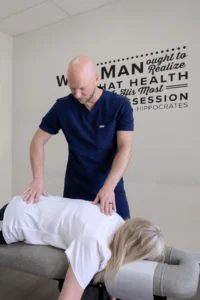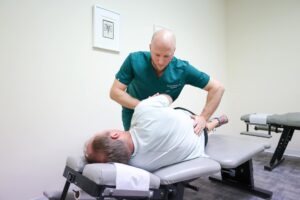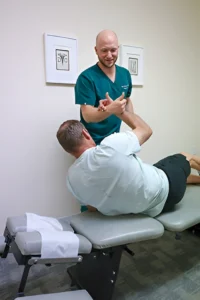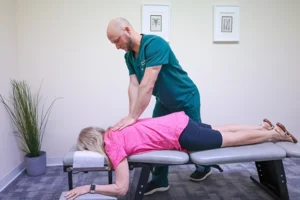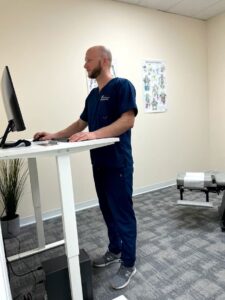
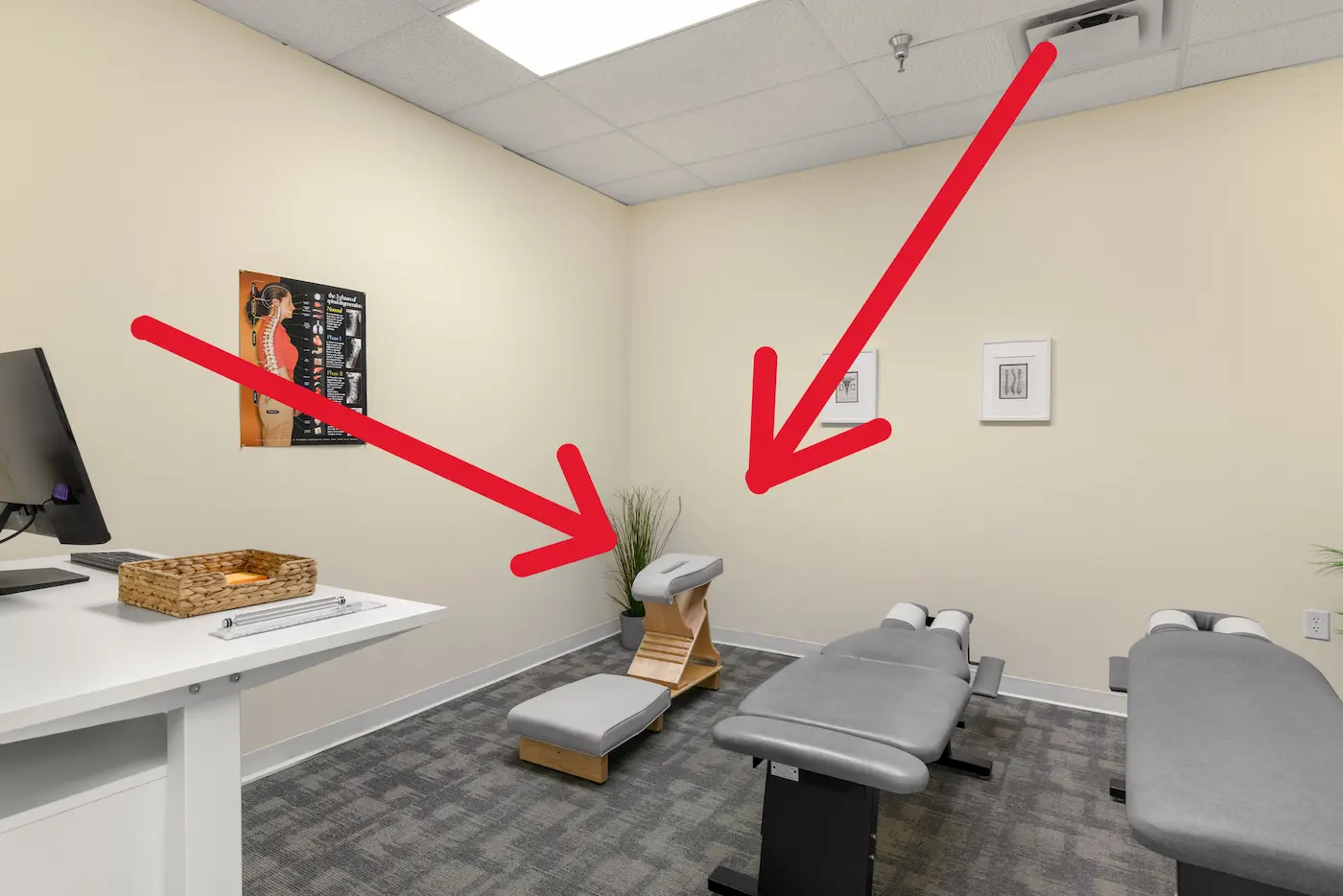
Yes, chiropractic care during pregnancy can be safe and comfortable, and the knee-chest table is a big reason why. You kneel with your chest supported while your belly hangs freely, so there’s no pressure on your baby during an adjustment. As a pregnancy chiropractor in Lincolnton NC, this is the table I trust for expecting moms, including my own wife during her current pregnancy.
The First Question Almost Every Pregnant Patient Asks
Most expecting moms who call our office ask some version of the same thing: “How are you going to adjust me with this belly?”
It’s a fair question. By the second trimester, lying on your stomach isn’t comfortable, and lying flat on your back for long stretches isn’t always recommended either. So the table you’re adjusted on matters more than most people realize.
The wrong setup means you spend your whole visit shifting around, bracing, and worrying about your baby. The right one lets you relax. And when you’re relaxed, the adjustment is gentler and your body responds better.
What Is a Knee-Chest Table?
A knee-chest table is pretty much what it sounds like. You kneel on a padded platform, and your chest and shoulders rest on a padded support in front of you. Your hips stay lifted, and your belly hangs freely in the open space between.
Nothing presses on your abdomen. Your baby has room, and your spine sits in a position that lets me reach the areas that tend to get tight and stuck during pregnancy, like the lower back, pelvis, and mid back.
You may also hear it called a knee-chest adjusting table or a Gonstead knee-chest table. Chiropractors have used this style of table for decades. In our office, it’s set aside specifically for our pregnant patients.
How It Compares to Pillows and Belly Cut-Out Tables
Some offices use wedge pillows or tables with a cut-out section for the belly. Those are reasonable options, and plenty of moms do fine with them.
What I like about the knee-chest table is that it removes belly pressure completely instead of trying to cushion it. That difference gets more noticeable as your pregnancy moves along. A position that feels fine at 14 weeks may feel very different at 34 weeks, and for most of my patients, the knee-chest table stays comfortable from the first trimester through the third.
Why My Wife Uses It During Her Pregnancy
My wife is pregnant right now, and she comes into the office for her adjustments on this exact table. I’m not sharing that as a sales pitch. I’m sharing it because it’s the most honest answer I can give to a question every patient deserves to ask: “Would you do this for your own family?”
When your wife is carrying your child, you think through every decision twice. I chose the knee-chest table for her because it’s the position I trust most for keeping her comfortable and keeping pressure off the baby. That same level of care goes into every expecting mom who walks through our door.
We even filmed one of her visits, so you can see exactly what the process looks like before you ever come in.
I grew up as the son of a chiropractor, watching my dad care for families in his community. Treating my own family now, and treating yours, is a big part of why I do this work. You can read more about my background and approach to care if you’d like to know who you’ll be seeing.
What Pregnancy Does to Your Spine and Pelvis
Your body changes fast during pregnancy, and your spine carries a lot of that load. Understanding what’s happening can make it easier to see why gentle chiropractic care helps so many moms feel better.
Your Center of Gravity Shifts Forward
As your baby grows, your weight moves toward the front of your body. Your lower back curves more to compensate, which puts extra stress on the joints and muscles there. That’s one of the most common reasons expecting moms deal with pregnancy back pain.
Relaxin Loosens Your Ligaments
Your body releases a hormone called relaxin to help prepare your pelvis for delivery. It does its job well, but it also makes the joints in your pelvis and lower back less stable. Joints that move more than usual can get irritated or stuck in uncomfortable positions.
Your Pelvis and Hips Take on New Stress
Between the extra weight and the looser ligaments, the pelvis often takes the biggest hit. Many moms notice pain in the hips, the tailbone, or deep in the buttock that sometimes shoots down the leg. That last one can feel a lot like sciatica pain, and it’s something I see often in the second and third trimesters.
If sleeping on your side has made your hips ache even more, you’re not alone. I wrote about why side sleeping can cause hip pain, and a lot of it applies to expecting moms too.
What an Adjustment on the Knee-Chest Table Feels Like
Every visit starts with a conversation. I’ll ask how far along you are, where you’re feeling pain, how you’re sleeping, and what your OB or midwife has told you. That tells me what to focus on and what to leave alone.
Then I’ll help you onto the table and adjust the pads until you’re settled. Some moms need a minute to find their spot, and that’s completely fine. There’s no rush.
The adjustments themselves are gentle, low-force, and quick. I explain each step before I do it, so nothing catches you off guard. Most of my pregnant patients are surprised by how relaxing the position feels, especially later in pregnancy when lying down anywhere else is a challenge.
If you’d like a closer look at how we structure care in general, our Our Method page walks through the full process.
Is Chiropractic Care Safe During Pregnancy?
For most healthy pregnancies, yes. Chiropractic care is generally considered safe in every trimester when it’s done with techniques designed for expecting moms. I still recommend letting your OB or midwife know you’re coming in, and I’m happy to work alongside them if they have questions.
There are times when chiropractic isn’t the right call. If you’re dealing with vaginal bleeding, placenta previa, preeclampsia, or you’ve been told your pregnancy is high risk, check with your provider before scheduling. Being upfront about that is part of doing this the right way.
When Should You Start Pregnancy Chiropractic Care?
There’s no single right time. Some moms come in during the first trimester to stay ahead of the changes. Others wait until the third trimester, when the aches start piling up.
If back pain, hip pain, or that shooting pain down the leg is starting to affect your sleep or your day, that’s a good sign it’s time to come in. We see expecting moms from Lincolnton, Denver, Maiden, Stanley, and across Lincoln County, and every care plan is built around where you are in your pregnancy and how you’re feeling.
Frequently Asked Questions
Will the knee-chest table still be comfortable late in my third trimester?
For most moms, yes. Because your belly hangs freely instead of resting on anything, the position tends to stay comfortable even in the final weeks. If something doesn’t feel right, we’ll adjust the setup or the approach on the spot.
Can I get adjusted during my first trimester?
Yes. Many moms start care early to help their bodies handle the changes ahead. We’ll keep everything gentle and adapt as your pregnancy progresses.
What if kneeling is hard on my knees?
Let me know at your visit. The table is well padded, and we can take breaks or modify how you’re positioned. Your comfort comes first.
Do I need a referral from my OB?
Most patients don’t need a referral to see a chiropractor, though some insurance plans have their own rules. Either way, we recommend keeping your OB or midwife in the loop so everyone is on the same page. You can find more answers on our FAQ page.
Feel More Comfortable Through Every Trimester
If you’re expecting and your back, hips, or pelvis are asking for relief, we’d love to help. Schedule online or call us at (980) 284-2525.